 logo
logo

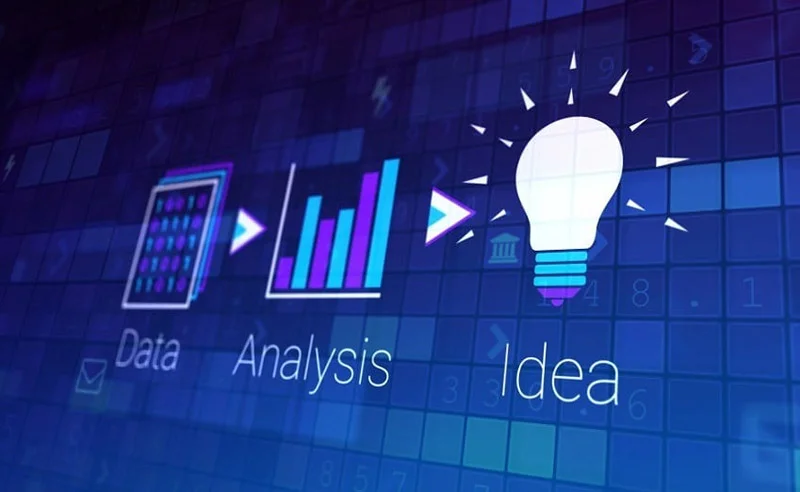
The main advantage that big data provides is an enhanced knowledge of customers. While in the past marketers were making decisions based on intuition and experience, nowadays their guesses could be confirmed by using data science.
As the path to an effective marketing plan becomes increasingly technical in nature, the responsibilities of chief marketing officers are changing. To stay ahead, CMOs need to leverage new technologies and data to get the right message in front of the right customer at the right time and measure the outcomes of their marketing efforts.
But how can they ensure these tasks are being accomplished effectively?
The answer is ‘Data Science’.
Data science in marketing helps teams move from broad assumptions toward decisions supported by customer, campaign, and performance data.
Marketing is now an inherently data-driven field, and data-driven marketing is more widely available than ever before.
The volume of marketing data has continued to grow. According to a 2025 survey of more than 400 marketers, 72% said the top benefit of data-driven strategies is improved marketing efficiency, while one in four said they do not use data monthly to drive that improvement. The finding highlights a current challenge for marketers: having access to data is not the same as being able to analyze and use it effectively (Adobe).
For marketers, this staggering amount of data is a gold mine. If this data could be properly processed and analyzed, it can deliver valuable insights that marketers can use to target customers. However, decoding huge chunks of data is a mammoth task.
This is where data science can immensely help.

Identify Personas and Optimize your Marketing Budget
The main goal of every marketer is to derive maximum ROI from their allotted budgets. Achieving this is always tricky and time-consuming. Marketing campaigns are broadly distributed irrespective of the location and audience. As a result, there are high chances for marketers to overshoot their budgets. They also may not be able to achieve any of their goals and revenue targets.
Things don’t always go according to plan and efficient budget utilization is not accomplished.
However, if they use data science to analyze their data properly, they will be able to understand which locations and demographics are giving them the highest ROI.
By analyzing a marketer’s spend and data acquisition, a data scientist can build a spending model that can help utilize the budget better. The model can help marketers distribute their budget across locations, channels, mediums, and campaigns to optimize for their key metrics.
Website Cookies and Tracking
A cookie is a file that a website deposits on a user’s machine. It’s basically the website’s way of writing itself a reminder note about something. Sometimes cookies are used to facilitate the login process on any website. When a user registers on your website, you can drop a cookie on their device that remembers the username they registered under. Generally, cookies collect information about a customer’s activity on a certain website.
For example, a clothing retailer’s website cookie file could contain such information as customers’ clothing and shoe size, his preferred colors, styles, brands, and his estimated income level, based on the price range choices.
Tracking practices have changed as privacy requirements, consent controls, and browser settings have become more important. Cookies are still used for functions such as analytics, advertising, and conversion measurement, but marketers increasingly need to combine consented first-party data with privacy-aware measurement approaches. Current guidance on cookies and user identification explains that cookies continue to support measurement and advertising, while related guidance also places increasing emphasis on consent and first-party data (Google).
All the features mentioned above allow marketers to create personalized promotions for individual customers. In the past, a shoe company would design a single advertisement for all the 20-year-old female university students living in Helsinki. Now, each of these students would get an individual ad, because one of them might prefer white Adidas sneakers, like the majority of the members of this group, while the minority would like black high Dr. Martens boots.
Not a single customer would be left unnoticed, thanks to big data, and therefore the effectiveness of a promotional campaign will increase. Continuing the story of Amazon, the pioneers of personalized advertisement, a relevant example from a customer point of view will be discussed.
Amanda Zantal-Wiener, a Marketing Blog staff writer, shared her experience with Amazon while discussing the brands which use personalized marketing in the best way possible. She describes herself as a person with a ‘borderline obsession with hip hop’ and attaches a screenshot of the Amazon main page, offering her different products related to her interest. She then notes that personalized ads also help companies provoke unplanned purchases.
Identify the Appropriate Price Strategy
Big data is not only a virtue for those concerned with online marketing. It helps with the most common and basic decisions as well, for example, pricing. Companies are used to determining the price considering the cost of the product, competitors’ prices, and value of the product to the customer, for example. Sometimes, when the business is not going well, marketers adapt the seemingly easiest way to boost sales – a 10% discount.
Baker et al. suggest that with big data capabilities it becomes possible to use many more factors to make a better decision. Those could be data from individual deals, decision-escalation points, incentives and performance scoring data, for instance. They stress the importance of approaching any price decision as an individual, especially in the B2B sector, as circumstances may vary from one deal to another.
Other Implementations of Data Science in Marketing
There are more than a few ways to practically apply data science techniques in marketing, we discussed a few but more examples are:
- Lead Targeting
- Advanced Lead Scoring
- Content Strategy Creation
- Social Media Marketing
- Email Campaigns
- Digital Marketing Platforms
- Product Development
- Sentiment Analysis
These applications also show why marketing data analytics is becoming part of day-to-day marketing work: teams need to compare performance, identify patterns, understand customer behavior, and connect results to budget and campaign decisions.
Final Thoughts
Data Science is a growing field, and full of potential and possibilities. So, without a doubt, Marketing will keep benefiting from big data and more practical ways to enhance marketing processes will keep emerging.
As a result of the progressive needs of customers and their expectations for more personalized experiences. Predictive and artificial intelligence marketing, as well as data-driven solutions, are becoming essential parts of successful marketing campaigns.
If you want to strengthen your marketing strategy with clearer, evidence-based decisions, you need a practical foundation in working with data. Data science in marketing may extend into predictive modeling and advanced techniques, but many marketing decisions begin with the ability to clean data, analyze performance, build dashboards, use statistics, and communicate insights. IMP’s Data analysis training courses help build these foundations through Excel, Power Query, Power BI, SQL, descriptive statistics, data visualization, data storytelling, and automation. These skills support stronger marketing data analytics before professionals move into more advanced data science techniques.