 logo
logo



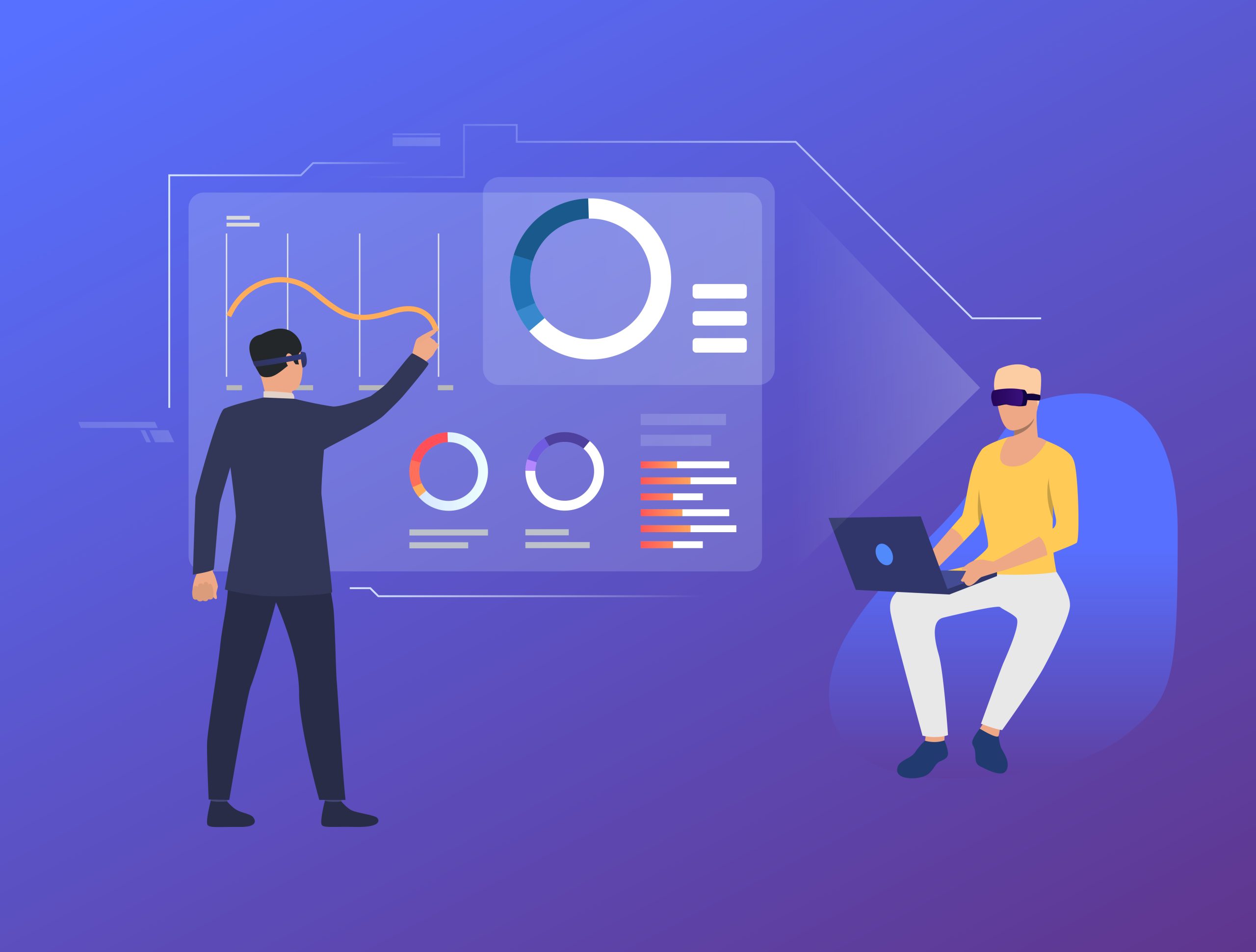
By 2026, data analytics at Microsoft will have become a full ecosystem. One that covers data collection, storage, transformation, analysis, visualization, automation, and AI — all working together.
This matters because most organizations no longer struggle with a lack of data. They struggle with fragmentation, different tools, different teams, and different versions of the truth. Microsoft’s analytics ecosystem aims to reduce that friction.
To understand how it works, we need to step back and look at the whole picture.
Microsoft’s data analytics: From tools to an ecosystem
Before looking at individual services, it helps to understand what Microsoft is trying to solve.
For years, analytics stacks were built piece by piece. A database here. A BI tool there. A separate automation layer. Over time, this created complexity instead of clarity.
Microsoft’s approach in 2026 is different. The focus is on one connected analytics ecosystem where data flows smoothly from source to insight, with shared governance, security, and identity.
This ecosystem spans Azure data services, Microsoft Fabric, Power Platform, and AI capabilities — all designed to work together, not compete.
Let’s delve deeper into each…
Azure as the foundation layer
Everything in Microsoft’s analytics ecosystem starts with Azure.
Azure provides the infrastructure layer where data is stored, processed, and secured. This includes services for structured data, unstructured data, streaming data, and large-scale processing.
Common building blocks include cloud storage, relational databases, and scalable compute engines. These services allow organizations to ingest data from applications, devices, APIs, and legacy systems.
The key idea here is flexibility. Azure does not force one data architecture. Instead, it supports multiple patterns — data warehouses, data lakes, lakehouses — depending on the use case.
This foundation is what makes the rest of the ecosystem possible.
Microsoft Fabric as the unifying analytics platform
Once the infrastructure is in place, the next challenge is coordination. That’s where Microsoft Fabric comes in.
Fabric acts as the unified analytics layer on top of Azure. Instead of managing separate tools for data engineering, data science, real-time analytics, and BI, Fabric brings them into one environment.
What makes this important is not just convenience. It’s consistency.
Data models, security rules, and governance policies are shared. Teams don’t rebuild the same logic in different tools. And data doesn’t get copied unnecessarily between systems.
In practice, Fabric reduces handoffs between teams and shortens the time from raw data to usable insight.
OneLake and the end of hidden data silos
As analytics stacks grow, data silos often grow with them. Different teams store their own versions of the same data. This creates confusion and trust issues.
Microsoft’s answer to this problem is OneLake.
OneLake is designed as a single, logical data lake for the entire organization. Data is stored once but can be accessed by different workloads — engineering, BI, machine learning — without duplication.
The value here is not just technical. It’s organizational.
When everyone works from the same data foundation, conversations shift from “whose numbers are right?” to “what should we do next?”
Power BI as the insight and decision layer
After data is prepared and modeled, it needs to be understood. This is where Power BI plays its role.
Power BI sits at the insight layer of the ecosystem. It turns datasets into dashboards, reports, and visual stories that business users can actually use.
By 2026, Power BI is no longer just a reporting tool. It is deeply integrated with Fabric, OneLake, and AI services. That means visuals are built on governed data models, not isolated extracts.
This integration reduces reporting chaos and increases trust in insights — especially important for executive decision-making.
Power Platform and analytics-driven automation
Analytics only creates value when it leads to action.
To bridge the gap between insight and execution, Microsoft relies on the Power Platform — especially Power Automate and Power Apps.
Within the analytics ecosystem, these tools allow teams to:
- Trigger workflows when data changes
- Send alerts when metrics cross thresholds
- Build simple apps on top of analytics outputs
- Automate repetitive reporting or data updates
This is where analytics stops being passive. Instead of waiting for someone to read a report, systems can respond automatically.
In 2026, this kind of analytics-driven automation is becoming a standard expectation, not an advanced feature.
AI and Copilot as accelerators, not replacements
As AI becomes more embedded across Microsoft products, its role in analytics is becoming clearer.
Copilot and AI services are designed to accelerate analytical work, not replace analysts.
They help with tasks like:
- Writing queries or transformations faster
- Explaining trends in plain language
- Generating draft visuals or summaries
- Assisting with exploratory analysis
The analyst still defines the question, checks assumptions, and validates results. AI simply reduces friction.
This balance is important. The ecosystem is built around human judgment, with AI acting as support — not as a black box.
Governance, security, and compliance across the stack
As analytics becomes more powerful, risks increase as well.
Microsoft’s ecosystem addresses this by applying governance and security consistently across services. Identity, access control, and data policies are shared rather than re-implemented in every tool.
This matters especially for regulated industries and public-sector organizations in regions like the Middle East.
By 2026, analytics maturity is no longer measured only by speed and sophistication — but also by control, transparency, and compliance.
How teams typically use the ecosystem together
To make this more concrete, here’s how a typical analytics flow looks inside Microsoft’s ecosystem:
- Data is ingested through Azure services and stored in OneLake.
- Fabric handles transformation, modeling, and analytics workloads.
- Power BI delivers insights to decision-makers.
- Power Automate triggers actions based on those insights.
- Copilot supports analysts throughout the process.
Each component has a clear role. And none of them operates in isolation.
Why understanding the full ecosystem matters
Many teams only learn one tool at a time. Power BI alone. Or SQL alone. Or automation alone.
But the real value comes from understanding how everything fits together.
Organizations that treat analytics as an ecosystem — not a collection of tools — move faster, make better decisions, and scale more easily.
By 2026, this integrated way of working is becoming the baseline, not the exception.
Final Thoughts
Understanding Microsoft’s data analytics ecosystem is no longer optional for modern analysts and teams. The tools are evolving, but the bigger shift is architectural and cultural.
Teams need people who can think end-to-end. From raw data to insight. From insight to action. From tools to systems.
This is exactly where structured training becomes important. Programs like the Data Analysis & Business Intelligence Diploma from IMP are designed around this reality — teaching not just individual tools, but how they work together in real business environments.
As analytics ecosystems grow more connected, the most valuable skill is not knowing one feature.
It’s understanding the whole system.