 logo
logo

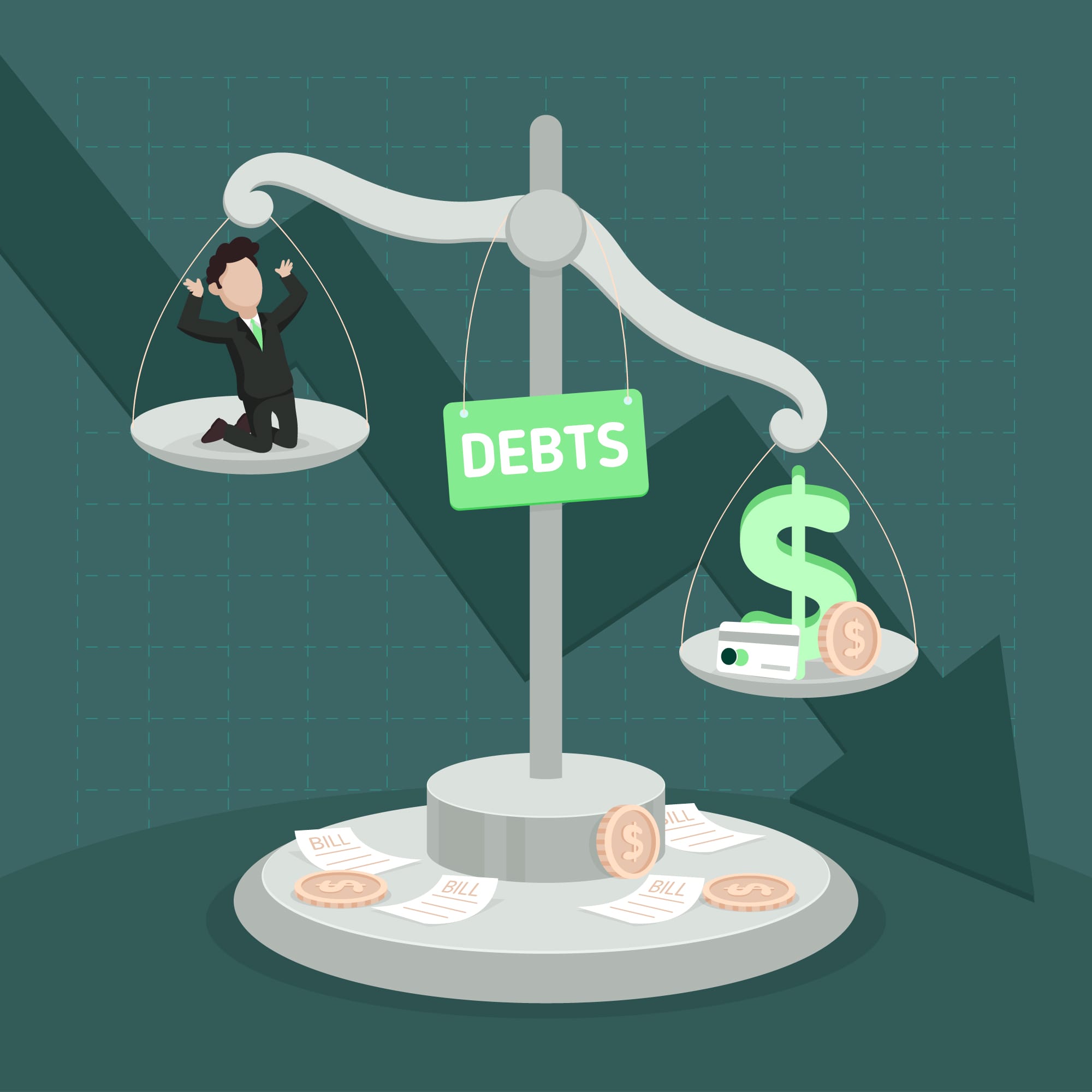
Every bad decision has a price. Most organizations never calculate it.
They absorb the consequences, attribute the outcome to bad luck or market conditions, and move on. The budget overrun gets explained away. The failed product launch becomes a lesson learned. The customer churn gets blamed on pricing. And the underlying cause, a decision made without adequate data, or with the wrong data, or with data that was never seriously interrogated, goes unexamined.
This is how the cost of poor decision making stays hidden. Not because it’s small, but because it never appears as a line item. It shows up instead as underperformance that nobody can fully explain, opportunities that were missed without anyone realizing they existed, and problems that could have been caught early but weren’t.
Why the Real Cost Is Almost Always Larger Than It Appears
When a bad decision produces a visible, immediate outcome, organizations tend to measure only the direct loss. The campaign that didn’t convert. The inventory that had to be written off. The hire that didn’t work out after six months.
Those direct costs are real. They’re also the smallest part of the total picture.
The full cost of a poor decision includes the opportunity cost of the path not taken, the compounding effect of resources allocated in the wrong direction over time, the downstream decisions that were built on a flawed foundation, and the organizational momentum lost when teams spend months executing a strategy that had to be reversed.
A pricing decision made without proper competitive analysis doesn’t just cost you the margin you gave away in the short term. It repositions your brand in ways that affect customer acquisition costs for years. A hiring decision made on gut feel rather than structured evaluation doesn’t just cost you the salary of a poor performer. It costs you the productivity of everyone that person managed, collaborated with, or reported to during their tenure. A market entry decision made without rigorous demand analysis doesn’t just cost you the capital invested in the failed expansion. It costs you the 18 months of leadership attention and organizational focus that could have been directed somewhere with a real return.
These compounding costs are almost never calculated. Which is exactly why organizations keep making the same category of mistakes repeatedly.
The Decision Environments Where Bad Data Costs the Most
Not all decisions carry the same analytical risk. Some decisions are reversible, low-stakes, and fast-moving enough that imperfect information is simply the operating reality. Others are high-commitment, long-duration, and structurally difficult to reverse once made. The latter category is where poor data use extracts the highest price.
Strategic Resource Allocation
Where an organization chooses to invest its capital, its people, and its leadership attention over a multi-year planning horizon is the highest-stakes decision category in business. And it’s the category most frequently driven by internal advocacy, political dynamics, and narrative persuasion rather than rigorous data analysis.
When strategic resource allocation goes wrong, the consequences compound over years. Capital gets locked into initiatives with deteriorating returns. Talent gets deployed in directions that produce limited business value. Leadership attention gets consumed by defending commitments that should have been questioned before they were made. The organizations that consistently allocate resources well share one characteristic: they have a disciplined analytical process for evaluating options before committing, not a process for justifying commitments after the fact.
Customer Acquisition and Retention Strategy
Acquiring the wrong customers is expensive in ways most organizations underestimate. High churn customers consume disproportionate service resources, generate more complaints, produce more returns, and leave reviews that affect future acquisition costs. A customer acquisition strategy built on volume metrics rather than quality and fit metrics can look successful on a dashboard while quietly degrading the economics of the entire customer base.
The data to distinguish high-value customers from high-cost ones exists in virtually every organization’s systems. The analysis is rarely done with enough rigor to actually change acquisition strategy. The result is marketing budgets optimized for the wrong outcome, generating customers who cost more to serve than they generate in lifetime value.
Product and Portfolio Decisions
Product decisions made without adequate market and customer data have a particularly long tail of consequences. A product that gets developed based on internal assumptions rather than validated customer need consumes engineering resources, marketing budget, and sales attention for months or years before the market delivers its verdict. By then, the opportunity cost has already been paid in full.
The more damaging pattern is portfolio inertia, continuing to invest in products or business lines that data would clearly identify as underperforming, because the political cost of acknowledging the underperformance is higher than the financial cost of continuing to fund it. This is one of the most expensive forms of poor data use in large organizations, not because the data is missing, but because the culture doesn’t allow it to be acted on honestly.
Operational and Supply Chain Decisions
Operational decisions that seem tactical, inventory levels, supplier selection, capacity planning, production scheduling, compound in ways that become visible only at scale. An inventory model built on outdated demand assumptions ties up working capital in slow-moving stock while leaving the business exposed to stockouts in high-velocity categories. A supplier selection driven by unit price rather than total cost of ownership generates hidden costs in quality failures, late deliveries, and expediting fees that dwarf the savings on the original contract.
These operational miscalculations rarely produce a single dramatic failure. They produce a steady, grinding underperformance that finance teams struggle to explain and operations teams attribute to execution rather than strategy. The data to identify and correct these patterns is almost always available. The analytical habit to use it systematically is what’s missing.
The Organizational Patterns That Make Bad Decisions More Likely
Understanding the systemic factors that lead to poor data use matters more than cataloging individual decision failures, because the systemic factors are what need to change.
Decisions Made at the Speed of Conversation
Modern business culture rewards decisiveness. The leader who makes fast, confident decisions is celebrated. The leader who slows down to demand better data before committing is sometimes seen as indecisive or overly cautious. This cultural norm actively works against good data use, particularly in high-growth environments where speed is treated as the primary virtue.
The consequence is a large volume of decisions made in meetings, on calls, and in hallway conversations, before any analytical work has been done. Some of these decisions are low enough stakes that speed is genuinely the right tradeoff. Many are not. The organizations that consistently make better decisions have learned to distinguish between the two and protect the time to do proper analytical work on the ones that deserve it.
Confirmation Bias Embedded in the Process
The most common form of poor data use in organizations isn’t ignoring data. It’s selectively using data to confirm decisions that have already been made intuitively. The strategy is set in a leadership offsite. The analytical team is then asked to build the business case. Data that supports the strategy gets included. Data that doesn’t gets explained away or excluded from the presentation.
This pattern is so normalized in many organizations that the people doing it don’t recognize it as a problem. It feels like using data. It has the aesthetic of analytical rigor. But it produces exactly the same quality of decision as if no data were used at all, because the outcome was predetermined before the analysis began.
Metric Selection That Optimizes for the Wrong Outcome
Organizations measure what they can measure, not always what matters. When the metrics used to evaluate decisions don’t capture the full cost of a choice, decision-makers optimize for the visible number at the expense of the invisible one.
A sales team measured purely on revenue will optimize for revenue in ways that damage margins, customer quality, and long-term retention. A marketing team measured on lead volume will optimize for leads in ways that harm conversion quality and sales efficiency. A procurement team measured on unit cost will optimize for unit cost in ways that generate total cost of ownership problems downstream.
Poor metric design is a form of poor data use. It doesn’t lack data. It uses the wrong data as the basis for evaluation, creating systematic incentives to make decisions that look good by the chosen measure while performing poorly by the measures that actually matter.
The Absence of Decision Reviews
Organizations that never systematically review past decisions and their outcomes have no feedback loop for improving decision quality over time. Each decision gets made fresh, with the same underlying assumptions and the same analytical habits that produced poor outcomes previously, because nobody has done the work of understanding what went wrong and why.
Structured decision reviews, comparing what was predicted against what actually happened and tracing the gap back to the quality of the information and the reasoning used at decision time, are one of the highest-return analytical investments an organization can make. They are also remarkably rare.
What Better Data Use Actually Changes
The goal is not perfect decisions. Uncertainty is inherent in every significant business choice, and no amount of data eliminates it entirely. The goal is better decisions on average, over time, in a way that compounds into measurable performance advantage.
Organizations that invest seriously in data quality, analytical capability, and decision process discipline don’t eliminate bad outcomes. They reduce their frequency, reduce their severity, and most importantly, learn from them faster. They catch flawed assumptions earlier in the decision process, before commitments are made that are expensive to reverse. They allocate resources toward higher-probability opportunities more consistently. And they build the feedback loops that make their decision-making progressively better rather than staying flat.
The financial impact of that improvement is significant and consistent across industries. Not because any single better decision produces a dramatic result, but because the cumulative effect of making fewer expensive mistakes, recovering faster when they do occur, and systematically reallocating resources toward what the data says is working compounds into a genuine and durable performance advantage over competitors who are still making decisions the old way.
The cost of poor data use is real, it is large, and in most organizations it is almost entirely invisible. Making it visible is the first step toward doing something about it.
Want to build the analytical skills to make better decisions with data and help your organization avoid the hidden costs of poor information use? Explore the Data Analysis & Business Intelligence Diploma at IMP, a hands-on program that takes you from data fundamentals all the way to advanced business intelligence.