 logo
logo

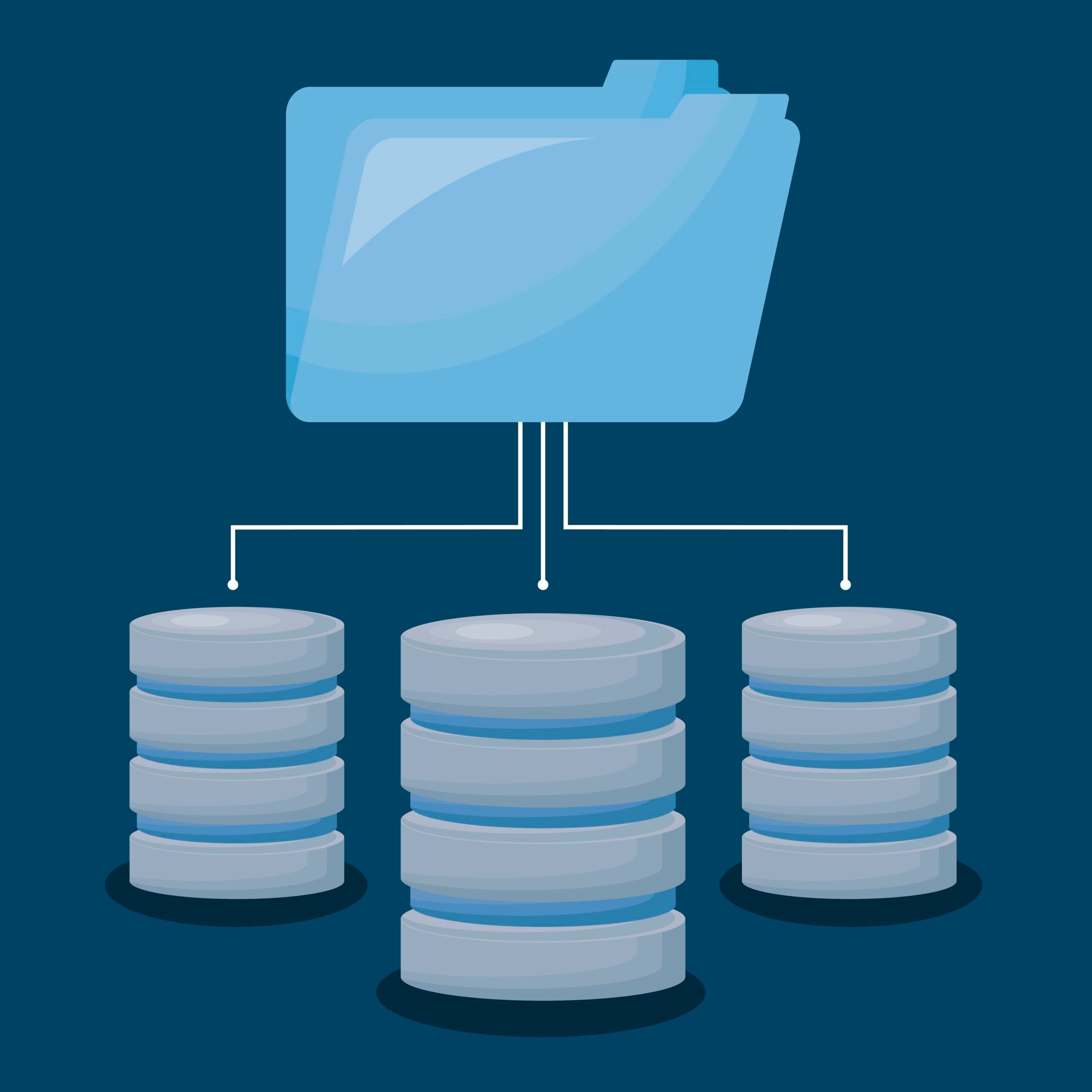
Databases can be compared to a library that began with a single shelf holding a few dozen books, only to evolve over time into a massive archive containing millions. In the early stages, retrieving any book takes only minutes the collection is limited and organization is simple. But as the number of books grows and classifications diversify, searching everything from a single point becomes increasingly difficult, slowing processes and overwhelming the system.
At that stage, the solution is not merely adding larger shelves, but redistributing the books across multiple sections each with its own structure and indexing system while maintaining coordinated access to all of them.
In the world of big data, databases undergo the same transformation. They start small and well-organized, then expand rapidly with growing users, transactions, and interactions, until a single server becomes a performance bottleneck. This is where database sharding emerges as an architectural solution distributing data across multiple servers so that each shard handles a specific subset of data rather than processing everything at once.
However, sharding is not merely a technical load-distribution mechanism. It is a strategic architectural decision that directly affects query speed, analytical efficiency, and system stability. Understanding its strategies and tools has therefore become essential in large-scale data analytics environments.
What Is Database Sharding?
Simply put, sharding is an architectural approach that divides a large database into smaller pieces called shards. Each shard functions as a relatively independent database, handling its share of operational and query workloads.
It can be compared to splitting an extremely large spreadsheet into multiple smaller sheets, each containing a specific subset of data and managing its own operations rather than trying to control everything from one oversized file that slows down with every search or update.
In the context of data analytics, sharding is not viewed merely as a performance optimization technique. It is a mechanism that enables organizations to manage continuously growing data volumes without sacrificing query speed or system stability.
As data generated from transactions, user behavior, and IoT devices increases, running complex analytical queries on a single database becomes costly in terms of both time and resources. Sharding allows data to be distributed for example, by geographic region, customer segments, or time ranges enabling parallel processing of analytical queries, followed by efficient aggregation of results.
In this way, sharding evolves from an infrastructure-level technical solution into a strategic enabler of scalable, stable big data analytics.
How Sharding Works
The sharding mechanism typically relies on three main components:
Partitioning Logic
This component defines the rules based on which data will be distributed across different shards. This decision is not purely technical it is also analytical, as it determines how data will later be queried and interpreted.
Among the most common partitioning strategies are:
- Range-Based Partitioning : Data is divided according to a specific value range, such as user IDs or timestamps. For example, users with IDs from 1 to 1000 may be stored in one shard, while users from 1001 to 2000 are stored in another.
- This approach is simple and intuitive, and works efficiently with time-series data such as transaction logs. However, it may lead to imbalance if operations become concentrated within a particular range.
- Hash-Based Partitioning : A specific value (such as an ID) is passed through a hash function, and the output determines which shard the data is assigned to.
- This method provides more balanced load distribution and is well-suited for systems with unpredictable workloads. However, it makes redistribution more complex when adding a new shard to the system.
- Geographic Partitioning : Data is divided based on geographic location for example, assigning one shard to Saudi Arabia and another to the UAE.
- This approach helps reduce latency in global applications and is widely used in multi-region e-commerce platforms.
It is important to note that the choice of partitioning strategy directly impacts query execution speed especially when analytical workloads rely on specific time ranges or geographic segments.
Shard Mapping
Once data has been partitioned, the system must know where each data segment resides. This is where the mapping mechanism between logical partitioning and physical distribution becomes essential. There are two primary approaches:
Static Mapping : Rules are predefined, and the data location is determined through fixed logic embedded within the application itself.
Dynamic Mapping : Managed through a centralized metadata service, which maintains information about where shards are located. This approach makes it easier to add or remove shards when needed.
In big data environments, dynamic mapping tends to offer greater flexibility especially when data volumes grow rapidly and require load rebalancing.
Query Routing
The critical component for analytics lies in ensuring that queries are directed to the correct shard. When an application sends a query, the system must determine:
- Which shard contains the requested data?
- Does the query span multiple shards?
- How will the results be aggregated afterward?
There are two common approaches:
- The application itself understands the partitioning logic and sends the query directly to the appropriate shard.
- A proxy or middleware layer handles query routing, abstracting the complexity away from the application.
In complex analytical workloads that span multiple shards, the efficiency of query routing and result aggregation becomes a decisive factor in overall response time.
What Are the Main Database Sharding Strategies?
There is no single perfect way to shard a database. The appropriate strategy depends on the structure of the data and how it is used operationally and analytically. Choosing a sharding strategy is not an isolated technical decision it directly impacts query performance, scalability, and long-term maintenance complexity.
Below are the most common strategies used in big data environments:
Horizontal Sharding
Horizontal sharding distributes rows of the same table across multiple shards. For example, in a user database, users may be distributed based on ID ranges: users 1–1000 in one shard, 1001–2000 in another, and so on.
This is the most common sharding strategy because it:
- Distributes data and workload relatively evenly.
- Facilitates horizontal scalability as the number of users grows.
- Works well for tables containing a large number of rows with similar structures.
However, its success heavily depends on the partitioning logic. If the data is not evenly distributed for instance, if activity concentrates within a specific ID range certain shards may become overloaded while others remain underutilized.
In data analytics contexts, this imbalance can lead to inconsistent query performance depending on the targeted segment.
Vertical Sharding
Vertical sharding does not divide rows. Instead, it distributes tables or even specific columns across different shards.
For example:
- User profile data in one shard.
- Transaction data in another shard.
- Activity logs stored in a third shard.
This strategy works efficiently when data domains are clearly separated and do not frequently overlap in queries. However, it becomes more complex if the application requires queries that combine data from multiple shards simultaneously. Such cross-shard queries may reduce performance instead of improving it.
From an analytical perspective, vertical sharding is preferable when data domains are clearly distinct for example, separating operational data from historical log data.
Geographic Sharding
Geographic sharding organizes data based on users’ geographic locations. For example:
- User data from Saudi Arabia stored in one shard.
- User data from the UAE stored in another shard.
The primary advantage of this approach is reducing latency by storing data closer to users. It is widely used in global e-commerce systems and multi-region platforms.
However, this strategy requires careful management of scenarios such as:
- Users who move between different geographic regions.
- Data that spans multiple locations.
- Maintaining consistency across distributed shards.
In the context of data analytics, geographic sharding simplifies the generation of fast regional reports. However, it can complicate comprehensive global analytics if the aggregation mechanisms are not designed efficiently.
The Role of Sharding in Big Data Analytics
- Accelerating Analytical Query Execution : By distributing data across multiple shards, analytical queries can be executed in parallel rather than relying on a single server. This significantly reduces response time for dashboards and complex analytics.
- Enabling Horizontal Scalability as Data Grows : As data generated from transactions and user behavior multiplies, sharding allows organizations to add new servers without rebuilding the entire system. This capability is critical in big data environments.
- Improving Performance Stability Under Load : Load distribution reduces the risk of system bottlenecks when running intensive or concurrent queries particularly in organizations that depend on real-time reporting.
- Supporting Parallel Processing : Different data segments can be analyzed simultaneously, with results aggregated afterward. This is especially important in time-series analysis and large-scale historical data processing.
- Reducing Latency in Multi-Region Environments : When geographic sharding is implemented, regional analytics can be performed locally without needing to access a distant centralized database.
- Enhancing Resource Efficiency : Sharding allows computational resources to be allocated based on the specific needs of each data segment, improving overall infrastructure utilization.
- Supporting Business Continuity : If one shard fails, the system can continue operating through the remaining shards, reducing the risk of complete service disruption.
- Enabling Scalable Data Warehouse Architectures : Sharding provides an architectural foundation for data warehouses and large-scale analytics platforms that depend on continuously growing and streaming datasets.
- In this sense, sharding is not merely an infrastructure management technique it is a core architectural component that enables efficient, stable, and sustainable big data analytics.
From Understanding Architecture to Mastering Analysis: Why You Need Structured Training
If sharding is an architectural decision that directly affects query speed, analytical efficiency, and system stability, then understanding it should not remain exclusive to engineering and infrastructure teams.
In big data environments, data analysts need to understand how data is stored, how it is distributed, and how that distribution can impact analytical outcomes. A slow query, incomplete results, or an inconsistent report may not stem from an analytical formula error but from the underlying data distribution itself.
This is where structured training becomes essential. Understanding sharding requires a solid foundation in data modeling, relationship design, query writing, and performance interpretation.
This is precisely the context in which the Data Analysis & Business Intelligence Diploma offered by the Institute of Management Professionals (IMP) was designed to provide a comprehensive and integrated perspective. Throughout the diploma, you will:
- Build strong data literacy and descriptive statistics foundations to better understand the nature of the data you work with.
- Master data preparation and integration using Excel, Power Query, and data modeling techniques.
- Learn to write efficient SQL queries to manage large-scale databases effectively.
- Progress to building analytical models and professional dashboards in Power BI that accurately reflect distributed data performance.
- Develop data storytelling skills and understand automation principles.
Through this pathway, you do not simply acquire tool-based skills. You cultivate an analytical mindset capable of understanding the relationship between technical architecture and practical analysis.
When working with distributed systems that rely on sharding, you will not be a passive user waiting for results. You will be an analyst who understands where the data originates, how it is aggregated, and why results may vary depending on how it is distributed.
If you work in a growing data environment or plan to transition into more advanced analytical roles start by building the right foundation.
Review the diploma roadmap and its modules, connect with the IMP team for further details, and make your decision with confidence. Because the ability to analyze big data efficiently begins with understanding its architecture from the inside not merely interpreting its outputs from the outside.