 logo
logo

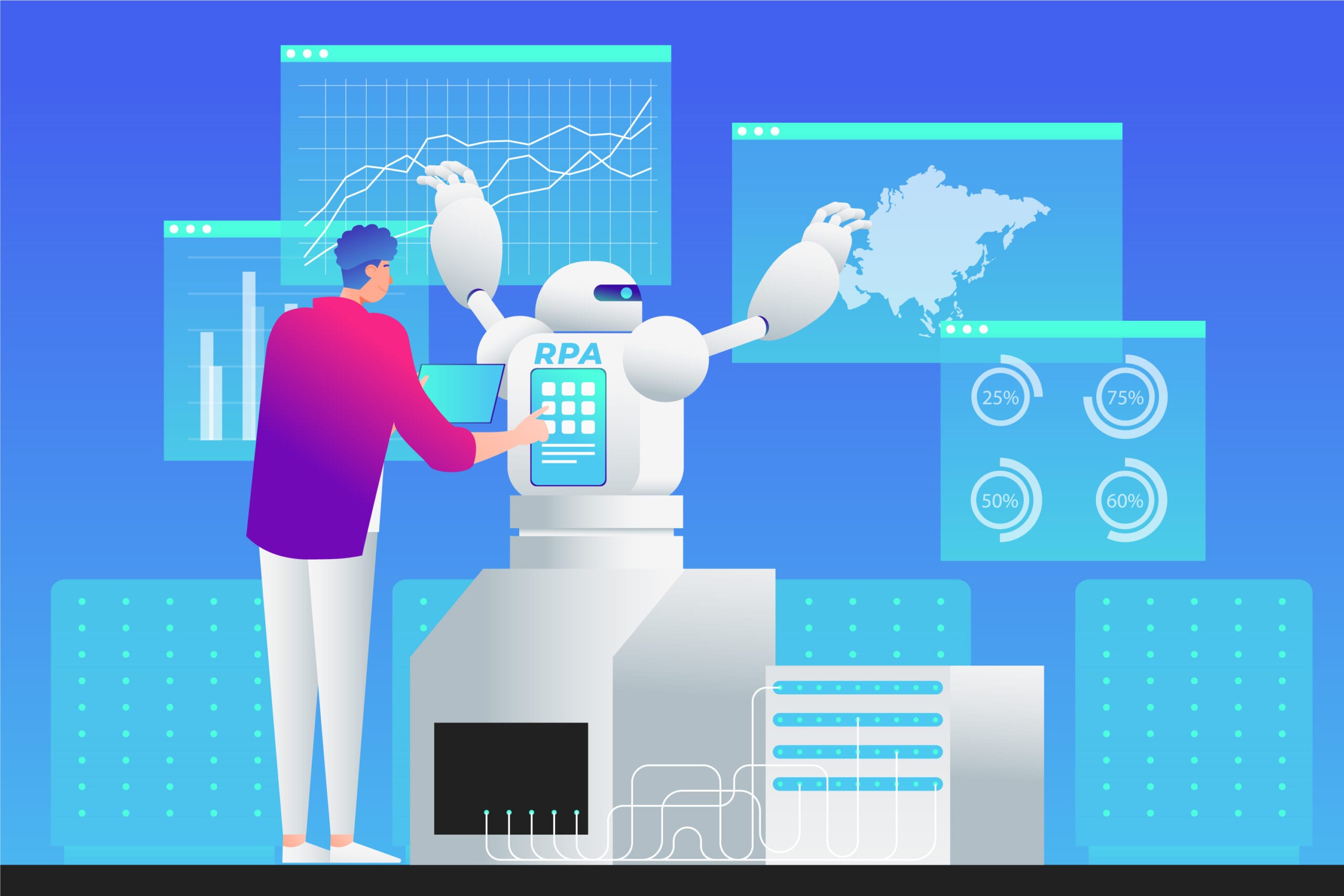
Imagine walking into your office in the morning, opening your performance dashboard, and before you even ask a question, you receive a notification: conversion rates in paid advertising have dropped by 7% over the past 12 hours. The likely cause? A shift in the behavior of new customers aged 25–34. Recommended action: temporarily reallocate budget toward organic search channels and increase personalized offers for this segment.
This alert was not written by an analyst, nor was it prepared by the reporting team at the end of the month. It was generated by AI agents working behind the scenes monitoring data, comparing patterns, detecting anomalies, and recommending practical actions before a small signal turns into a major problem.
In this article, we highlight some of the most important applications of AI agents in data analytics and business intelligence. Let’s begin.
5 Applications of AI Agents in Data Analytics and Business Intelligence
Automated Data Analysis
Automated data analysis represents one of the most prominent applications of AI agents in data analytics and business intelligence environments in 2026. Instead of waiting for periodic reports or discovering deviations after they escalate, AI agents continuously monitor business metrics, analyze patterns, and extract unusual signals without direct human intervention.
For example, AI agents such as Arka Analytics monitor key performance indicators (KPIs) in real time, detecting changes such as declining sales in a specific sector or geographic region, while suggesting potential causes and corrective actions. Estimates indicate that this type of automation can save up to 95% of the time previously spent by teams on manual exploratory analysis.
To illustrate with a practical example: suppose an e-commerce company notices a sudden decline in home appliance sales in Riyadh. Instead of the team manually reviewing multiple reports and comparing time periods, the AI agent automatically connects data across advertising campaigns, inventory levels, shipping speed, and customer behavior. It then identifies that the issue is linked to increased delivery times in that region over the past three days. The agent may recommend redistributing inventory or adjusting shipping policies. Here, the agent does not merely present numbers; it provides contextual explanations that support decision-making.
Automated data analysis through AI agents helps organizations:
- Detect deviations early before they turn into tangible financial losses.
- Save up to 95% of analytical effort in exploratory analysis.
- Reduce human bias through comprehensive data examination without prior assumptions.
- Accelerate decision-making by recommending actions based on real-time analysis.
- Free analysts to focus on strategic interpretation rather than manual pattern searching.
Trend Forecasting
Trend forecasting is one of the most impactful applications of AI agents in data analytics and business intelligence in 2026. Rather than simply reporting what has already happened, AI agents analyze time series data, compare historical patterns, and connect them with external factors such as seasonality, promotions, pricing changes, and customer behavior to build continuously updated future projections.
Forecasting is no longer a quarterly static report. It has become a dynamic process that refreshes with every new data input. AI shifts from being a descriptive tool to an early warning system capable of identifying trends before they become obvious to the market.
Consider a practical example: a retail clothing company observes relatively stable sales within a particular category. The AI agent analyzes historical data, compares on-site search patterns, return rates, and digital campaign engagement, and detects a gradual increase in interest from a specific customer segment in a particular product ahead of peak season. Based on this insight, it predicts a demand increase in the coming weeks and recommends increasing stock levels or launching a proactive marketing campaign.
With this approach, the company does not wait until the product runs out to respond it acts ahead of the demand wave.
Trend forecasting with AI agents supports organizations by:
- Improving prediction accuracy through multi-source pattern analysis.
- Reducing stockout or overstock risks by anticipating demand early.
- Enabling strategic planning based on live data rather than intuition.
- Encouraging proactive responses to market changes instead of reactive ones.
- Strengthening confidence in decisions through continuously updated, performance-validated models.
Automated Reporting
Automated reporting highlights the difference between using artificial intelligence as a supporting tool and deploying it as an active agent within the business intelligence cycle. In 2026, reports are no longer manually built by extracting, compiling, formatting, and presenting data. Instead, AI agents connect multiple data sources such as GA4, advertising platforms, and social media channels and generate customized reports that summarize key metrics, deviations, and recommendations in a format easily understood by decision-makers.
Solutions like NoimosAI exemplify this approach by producing daily marketing campaign summaries that highlight essential insights instead of overwhelming executives with unnecessary details.
To illustrate: imagine a marketing director managing a multi-channel campaign. Rather than waiting for a weekly team report, they receive a daily analytical brief each morning outlining channel performance, conversion rates, customer acquisition cost, and key changes compared to the previous day all with contextual explanations.
The agent does not merely present numbers. It flags critical signals such as a channel with rising costs but stagnant conversions, or content generating exceptional engagement that deserves scaling. The report thus evolves from a descriptive document into a daily leadership tool.
Customer Behavior Analysis
In modern business environments, understanding customer behavior goes far beyond tracking purchase rates or conversion metrics. It has become a deep analytical process focused on identifying subtle patterns that precede buying decisions.
Here, AI agents track the customer journey across channels, analyze interactions, time spent on pages, click behavior, visit frequency, and connect this with purchase history and previous campaign responses. Rather than simply describing what customers did, the system builds a comprehensive behavioral profile that enables organizations to anticipate next actions and propose personalized offers for each segment.
Consider a practical example: an e-commerce platform notices a rising cart abandonment rate within a specific product category. The AI agent analyzes the behavior of this segment and discovers that most customers spend significant time comparing specifications before exiting, and a large percentage return within 48 hours via organic search.
Based on this insight, the agent recommends sending a personalized incentive during that timeframe or improving price comparison visibility directly on the product page.
Customer behavior analysis with AI agents enables organizations to:
- Gain deeper visibility into the full customer journey across channels.
- Build dynamic segments based on real behavioral data rather than demographics alone.
- Increase conversion rates through personalized offers and recommendations.
- Predict churn risk and implement proactive retention strategies.
- Strengthen long-term loyalty through data-driven personalized experiences.
Executive Decision Support
Executive decisions are no longer based on delayed reports or high-level summaries. In 2026, they rely on real-time insight streams powered by AI agents capable of analyzing data within full business context.
AI agents function as a strategic analytical layer monitoring KPIs, comparing scenarios, and simulating the potential impact of decisions before they are executed. Their role extends beyond reporting what is happening to evaluating options such as:
- What would happen if prices were reduced by 5%?
- What is the impact of reallocating marketing budgets?
- How would changing credit terms affect cash flow?
Imagine a board meeting discussing expansion into a new market. Instead of relying solely on traditional presentation slides, the AI agent analyzes historical performance in similar markets, estimates projected demand, calculates acquisition costs, and models profitability under three different scenarios.
Within minutes, executives receive a clear, data-backed quantitative view supported by historical insights and predictive modeling. Decisions are no longer driven by intuition alone but by multi-dimensional analysis enhanced with digital simulations.
Executive decision support through AI agents provides multiple benefits:
- Presenting data-backed scenarios before decisions are made.
- Accelerating executive decision cycles through real-time analytics.
- Reducing risk by simulating potential outcomes prior to implementation.
- Improving financial and operational forecasting accuracy.
- Allowing leadership to focus on strategy rather than data gathering.
What Do You Need as a Data Analyst to Benefit from AI Agents and How Does the IMP Diploma Help?
The real value of AI agents does not lie in simply experimenting with a new tool. It lies in having a strong analytical foundation that enables you to guide the agent, understand its outputs, and evaluate them critically.
An AI agent may monitor metrics, forecast trends, and recommend actions but it operates on data structures and models that you are responsible for designing and configuring. As a data analyst, you therefore need:
- Strong Data Literacy: To understand data types, sources, quality, and potential biases before feeding them into any model.
- Data Preparation and Cleaning Expertise: Because AI agents will amplify data errors just as quickly as they detect insights if the inputs are flawed.
- Ability to Build Sound Data Models: Defining facts, dimensions, and relationships to ensure KPI consistency across departments.
- Proficiency in SQL: To control what data enters the agent and to validate aggregations and transformations.
- Skill in Interpreting Results and Storytelling with Data: So that AI recommendations become informed decisions rather than context-free numbers.
Without this foundation, AI agents can quickly become opaque systems that produce recommendations you neither fully understand nor confidently defend before management.
The Data Analysis & Business Intelligence Diploma offered by the Institute of Management Professionals (IMP) is designed to systematically and practically build this analytical depth.
The program begins with strengthening data literacy and descriptive statistics to enable critical data interpretation. It then progresses to Excel covering advanced formulas, PivotTables, Power Query, and data modeling for structured preparation and integration.
You then move to Power BI to build clear data models and professional dashboards, learn SQL to manage queries and datasets directly at the source, and develop storytelling skills to transform analysis into strategic communication.
Through this structured pathway, you do not simply learn how to operate tools. You develop an analytical mindset capable of working alongside AI agents as a professional guiding them with the right questions, validating their outputs, and transforming their insights into confident, actionable decisions.
Take the next step today to elevate your skills or your team’s and stay ahead in the data-driven future.
.