 logo
logo

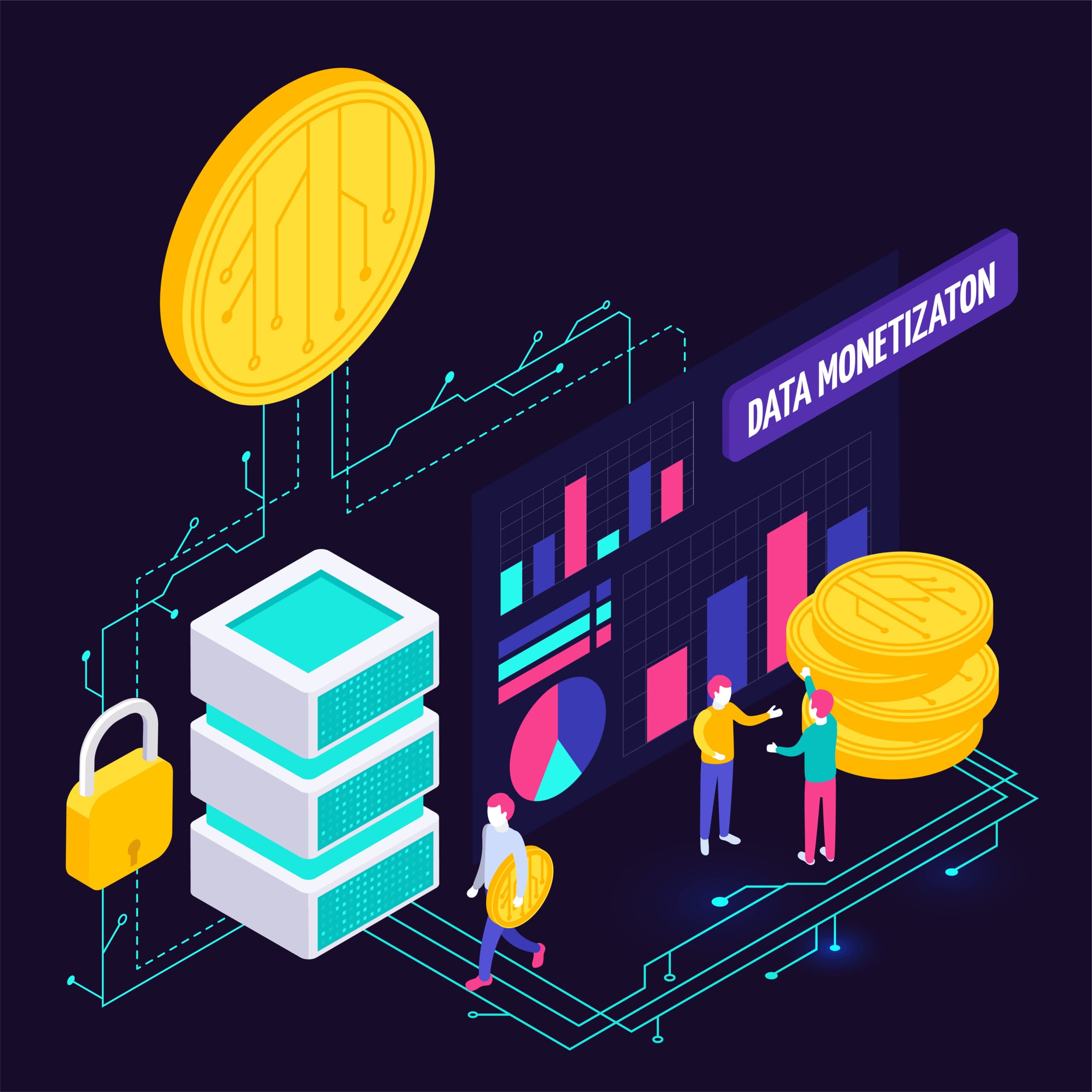
Across the Middle East, organizations are investing heavily in data platforms, analytics teams, and AI capabilities. Costs rise. Expectations rise with them.
Eventually, leadership asks a difficult but important question:
“Can data generate revenue not just insight?”
This is where data monetization enters the conversation.
Data monetization is not about selling raw data.
It is about turning analytics, insight, and intelligence into measurable economic value directly or indirectly.
Keep on reading…
What Is Data Monetization?
Data monetization is the practice of using data and analytics to:
- Create new revenue streams
- Enhance existing products and services
- Increase customer value
- Improve pricing and differentiation
It reframes analytics from a support capability into a strategic business asset.
Direct vs Indirect Data Monetization
Understanding this distinction is critical.
Indirect Data Monetization (Most Common)
Data is used to:
- Improve decision-making
- Optimize pricing and operations
- Reduce churn
- Increase customer lifetime value
Revenue increases as a result of better decisions not through selling data itself.
This is the most realistic and sustainable path for most organizations.
Direct Data Monetization (More Advanced)
Data or analytics is packaged as:
- Insights
- Benchmarks
- Dashboards
- APIs
- Intelligence products
And offered to:
- Customers
- Partners
- Ecosystem players
This model requires high maturity, strong governance, and clear value propositions.
Why Data Monetization Matters in the Middle East
Middle Eastern organizations operate in environments where:
- Large data volumes already exist
- Digital platforms are scaling rapidly
- Ecosystems (government, logistics, fintech, e-commerce) are interconnected
- Margins are under pressure
Monetizing data allows organizations to:
- Differentiate beyond price
- Build ecosystem influence
- Justify analytics investment
- Create defensible advantages
Common Myths About Data Monetization
Myth 1: Data Monetization Means Selling Data
In reality, selling raw data is risky, limited, and often regulated.
The real value lies in insight, aggregation, and intelligence.
Myth 2: Only Tech Companies Can Monetize Data
Any organization that understands its domain deeply can monetize analytics especially in logistics, retail, finance, healthcare, and government-linked sectors.
Myth 3: You Need Advanced AI First
Monetization depends more on decision relevance than model sophistication.
What Makes Data Monetization Successful
1. Clear Value Proposition
Monetized analytics must solve a real problem:
- Reduce cost
- Improve performance
- Lower risk
- Increase confidence
If customers or partners don’t clearly see value, monetization fails.
2. Strong Governance and Trust
Data products must be:
- Accurate
- Consistent
- Governed
- Explainable
Trust is non-negotiable especially in regulated Middle Eastern markets.
3. Decision-Centric Design
Successful data products are built around:
- Decisions users need to make
- Trade-offs they face
- Risks they manage
Dashboards without decisions do not monetize.
4. Mature Analytics Capability
Organizations must already have:
- Reliable data foundations
- Clear ownership
- Analytics maturity
- Skilled analysts
Trying to monetize immature analytics exposes weaknesses instead of value.
Examples of Data Monetization Models
While specifics vary by sector, common models include:
- Performance benchmarks for merchants or partners
- Predictive insights offered as premium features
- Risk or demand scores embedded in services
- Analytics-powered advisory offerings
The key is embedding intelligence into existing value chains.
Why Data Monetization Often Fails
Common reasons include:
- Treating monetization as a technical project
- Lack of commercial ownership
- Weak differentiation from free reports
- Governance concerns raised too late
- Analysts disconnected from business value
Monetization fails when analytics is not aligned with business strategy.
The Talent Gap in Data Monetization
Monetizing data requires professionals who can:
- Understand customer and market needs
- Translate analytics into value propositions
- Balance insight, risk, and usability
- Communicate value clearly
- Work across analytics, product, and commercial teams
This is a rare hybrid skill set but increasingly critical.
Building Monetization-Ready Analytics Capability
The IMP Data Analysis & Business Intelligence Diploma prepares professionals to think beyond reporting and dashboards.
It helps them:
- Connect analytics to business value
- Understand decision-centric design
- Operate within governance constraints
- Support product and commercial strategy
- Grow into senior analytics and product roles
If you want analytics to create measurable value not just insight this diploma prepares you for that transition.
Register now for the IMP Data Analytics Diploma
Build analytics skills that turn data into sustainable value.