

As we look toward 2026, staying ahead means understanding the latest Data Analytics Trends. So, what can we expect in data analytics trends next year, and where is the Middle East headed?
Let’s answer!What Are the Top Data Analytics Trends in the Middle East for 2026?
Trend 1: Real-time & Edge Analytics for Faster Decisions
Many organisations in the region are moving past the old habit of waiting for weekly or monthly reports. They need information the moment something changes, not after the fact.This shift is showing up clearly in places like Dubai and Riyadh, where smart-city projects rely on constant streams of data from sensors, roads, and public services. A recent study on traffic and mobility in both cities highlights how real-time data and AI predictions help authorities react faster and plan betterOrganizations are moving beyond monthly reports and dashboards. They want insight as it happens. In the Middle East, with smart-city projects, IoT sensors, and connected infrastructure, real-time analytics is gaining ground.So, in 2026, expect many organisations in the region to adopt edge analytics (processing data closer to where it’s generated) to avoid slowdowns and heavy network loads.Trend 2: Data-products & Analytics-as-a-service (Not Just Reports)
Companies no longer want static reports. They want analytics embedded into their operations and available as services. This means packaging analytics output into “data-products” that can be consumed by different teams or customers.In the Middle East, with digital transformation happening fast, organisations are establishing analytics platforms rather than point tools. According to a report, the Middle East data analytics market is projected to grow at a CAGR of 23.95% from 2025 to 2033. That growth signals deeper adoption — not just experimentation.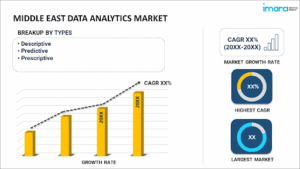 For 2026: if you’re in the region, building an analytics platform (rather than isolated dashboards) matters. And offering analytics capabilities to partners or customers can open new streams.
Trend 3: AI-driven Insights + Governance & Data Literacy
One of the strong shifts: analytics is increasingly powered by AI and machine learning. But alongside this, governance and literacy are becoming non-negotiable.In the Middle East, governments are investing in data governance frameworks and open-data initiatives. For example, Saudi Arabia’s data portal is gaining traction.At the same time, analytics professionals are needed. Without them, tech won’t deliver value.So, in 2026, expect growth in analytics teams, data literacy training, and governance frameworks in the region. Analytics won’t just remain a “tech project”; it will be a business capability.Trend 4: Industry-specific Analytics Growth in the Gulf
Some sectors in the Middle East are accelerating faster than others. For example:- Healthcare analytics is growing, according to a recent report reveals that the Middle East & Africa healthcare analytics market is expected to have a CAGR of 18.95% from 2025-2033.
- Smart-city initiatives mean more data and more demand for analytics in transportation, utilities, and infrastructure. The “Capacity Middle East 2025” conference highlighted that data-centre and AI infrastructure are booming in the region.
Trend 5: Infrastructure Expansion, Cloud & Regional Data-sovereignty
Analytics tools need the right infrastructure. In the Middle East, digital infrastructure is being upgraded rapidly. According to a report, the UAE analytics market alone was worth USD 1,884.8 million in 2024 and is expected to reach USD 5,167.4 million by 2030.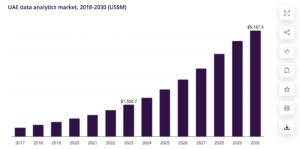 Also, when data is stored, processed, or moved across borders, sovereignty and regulation come into play. Many Middle-East countries are introducing data-localisation rules.So in 2026, organisations should plan for an analytics infrastructure that meets regional regulation, cloud readiness, and data-sovereignty requirements.